
The Property Manager’s Guide to Electrical Compliance in Boston: Ensuring Safety and Avoiding Fines
Maintaining a commercial property in Boston requires more than just keeping the lights on. You face a complex landscape of local regulations, state codes, and safety standards that evolve every few years. Boston electrical compliance is a critical priority for property managers who want to protect their tenants and avoid the heavy financial penalties associated with violations. The historic nature of many Boston buildings combined with modern energy demands creates a unique challenge for your facility maintenance strategy.
Failing to comply with the Massachusetts Electrical Code can lead to more than just a fine. It can result in project shutdowns, delayed occupancy for new tenants, and significant liability if an electrical fire occurs. You need a clear understanding of the rules enforced by the Boston Inspectional Services Department to keep your operations running smoothly. This guide provides the essential information you need to navigate compliance, perform necessary inspections, and choose the right partners for your electrical work.
Understanding the Massachusetts Electrical Code and Boston Enforcement
Boston follows the Massachusetts Electrical Code which is formally known as 527 CMR 12.00. This state code is based on the National Electrical Code or NFPA 70. Massachusetts recently moved toward the 2026 edition of this code. It includes specific amendments that apply only to buildings within the Commonwealth. As a property manager, you must recognize that while the state sets the code, the city of Boston enforces it through the Boston Inspectional Services Department.
The Inspectional Services Department employs wiring inspectors who review every permit and perform field inspections for commercial and residential properties. They ensure that all electrical installations meet the rigorous safety standards required for a dense urban environment like Boston. You should stay informed about Commissioner Bulletins issued by the city. These documents offer official guidance on how specific policies are implemented across the city. Following these guidelines ensures that your building remains a safe place for businesses and residents alike.
High Risk Areas for Property Managers: Common Violations
You can avoid many common issues by identifying the high risk areas that inspectors focus on during their rounds. Most violations in Boston stem from a lack of proper permitting or the use of outdated equipment that cannot handle modern electrical loads. By focusing on these specific areas, you can proactively address problems before they result in a formal citation.
Unpermitted Work and Licensing Issues
The most frequent violation in Massachusetts involves performing electrical work without a proper permit. You might think that minor changes or repairs do not require official paperwork, but the law states that almost all electrical work beyond simple maintenance needs a permit. This includes installing new outlets, upgrading lighting, or adding circuits for office equipment.
In Boston, only a master electrician with a valid Licensed Electrical Contractor registration can pull a permit for a commercial or rental property. You cannot have your general maintenance staff perform wiring work unless they hold the appropriate state licenses and have secured a permit. Using unlicensed individuals can result in immediate project shutdowns and heavy fines from the city. Always verify that your contractor is the permit holder for every job performed on your site.
Panel Upgrades and Service Entrance Compliance
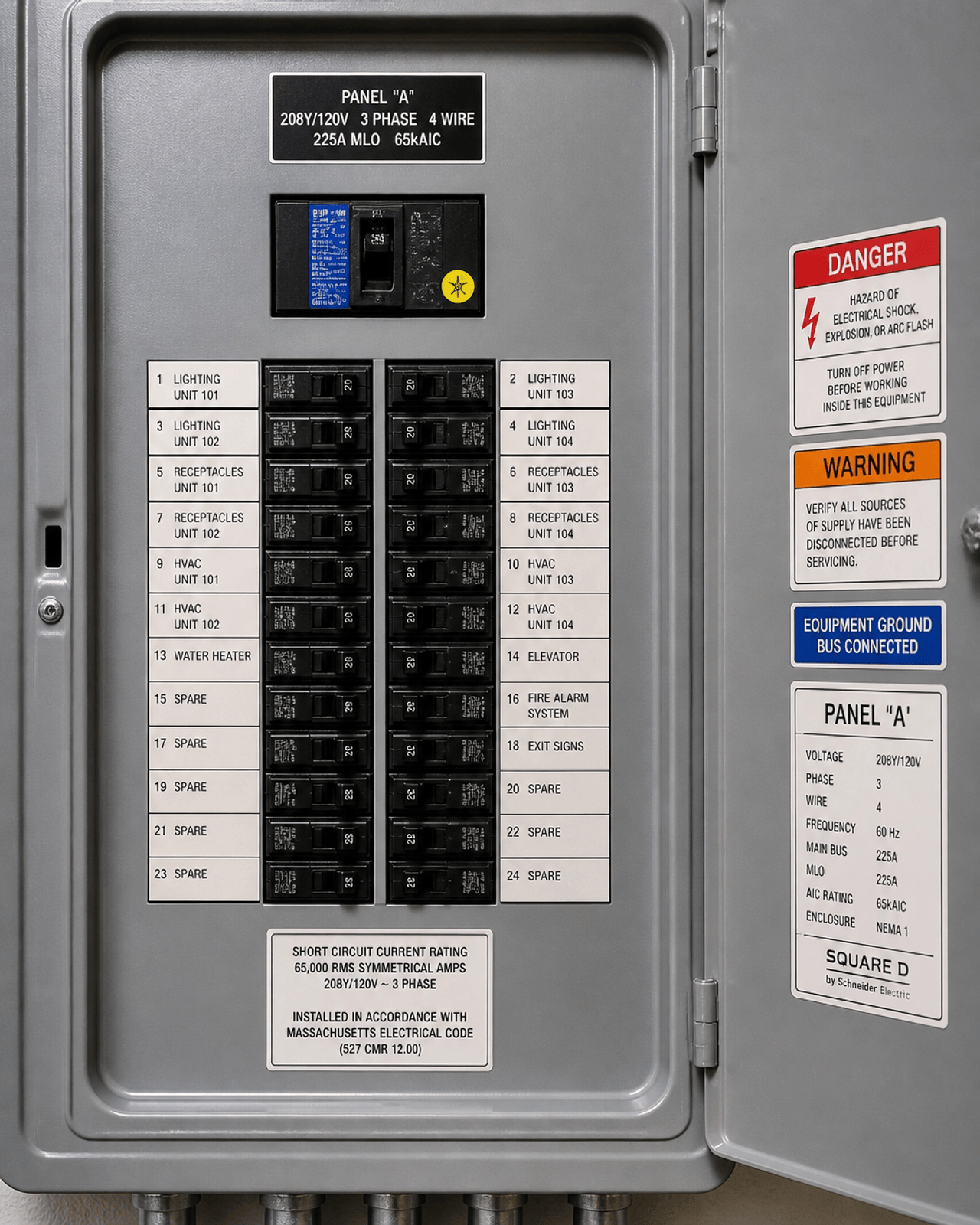
As your tenants add more technology and equipment to their spaces, your existing electrical panels may become overloaded. Outdated panels are a significant fire hazard and a top priority for inspectors. Massachusetts has strict requirements for service entrance work, which includes the meter socket, conduit risers, and main disconnects.
Common violations in this area include improper grounding of service equipment and missing directory labels on breakers. You must ensure that every circuit in your panels is clearly and professionally labeled. If you are upgrading your service to accommodate new loads like Electric Vehicle charging stations, you must perform load calculations first. Skipping this step often leads to failed inspections and the need for expensive emergency repairs.
The Expansion of GFCI and AFCI Protection
The latest updates to the Massachusetts Electrical Code have expanded the requirements for Ground Fault Circuit Interrupter and Arc Fault Circuit Interrupter protection. You must now ensure that these safety devices are present in more locations than ever before. This includes kitchens, bathrooms, laundry rooms, and any damp or wet locations in your commercial facility.
When you renovate a space or extend an existing circuit, that portion of the wiring must meet the current code. Inspectors often find that older buildings have been partially upgraded without adding the required GFCI or AFCI protection. Maintaining these standards is essential for the electrical outlets and switches repair needs of your facility. Upgrading these devices provides peace of mind and significantly reduces the risk of electrical shock or fire.
How to Avoid Costly Fines and Project Delays
Avoiding fines requires a disciplined approach to documentation and scheduling. You should view the inspection process as a collaborative effort to ensure the safety of your building. By following a standard procedure for every electrical project, you can eliminate the surprises that lead to delays.
Verify Licenses Before Hiring: Always check the credentials of your electrical partner to ensure they hold a Massachusetts master electrician license.
Insist on Permits: Require a copy of the electrical permit before any work begins on your property.
Coordinate Rough and Final Inspections: Ensure that inspectors can view the wiring before the walls are closed during the rough inspection phase.
Maintain a Compliance File: Keep all permit records, inspection approvals, and final plans in a centralized location for every building you manage.
Budget for Reinspections: While the goal is to pass on the first try, you should always allow time in your schedule for potential corrections and reinspection fees.
Failure to follow these steps can result in the city withholding a certificate of occupancy. This can be devastating for your commercial tenants who are waiting to open their doors for business. Proactive management of the permitting process is the best way to protect your professional reputation and the financial health of your property.
The Benefits of a Proactive Electrical Maintenance Plan
You do not have to wait for an inspection or a system failure to address electrical issues. A proactive maintenance plan allows you to identify potential violations and safety hazards before they become emergencies. By partnering with a comprehensive service provider like Jovel Inc., you can transition from reactive repairs to scheduled improvements.
Our team provides visual proof of work through photos and checklists, giving you total transparency into the health of your electrical systems. We use data to monitor equipment health and help you plan for future upgrades. This approach is especially beneficial for commercial facility management where consistency and reliability are paramount. Regular audits of your electrical infrastructure ensure that you are always ready for an official city inspection.

Frequently Asked Questions about Boston Electrical Compliance
What is the most common reason for an electrical fine in Boston?
The most common reason is performing work without a permit or using unlicensed labor. The city of Boston is very strict about ensuring that only qualified professionals handle wiring to prevent fires in the city’s dense buildings.
Does my existing building need to meet the 2026 code?
Older buildings are generally grandfathered into the code that existed at the time of construction. However, any new work, renovations, or additions must comply with the current Massachusetts Electrical Code. If an inspector finds an unsafe condition in an older system, they have the authority to require a modern upgrade.
Who is responsible for pulling the electrical permit?
The licensed electrical contractor is responsible for obtaining the permit. As a property manager, you should never pull a permit yourself for a commercial or rental property. Doing so can expose you to legal liability and may be a violation of state law.
How often should I have my commercial electrical system inspected?
You should conduct a professional safety audit at least once a year. This helps you identify loose connections, overloaded circuits, or damaged equipment before they cause a failure. Regular inspections are a key part of an effective preventative maintenance strategy.
Partnering with Jovel Inc. for Peace of Mind
Navigating the complexities of Boston electrical compliance requires a partner who understands the local landscape and the technical requirements of the law. Jovel Inc. provides the expertise and transparency you need to manage your properties with confidence. We handle everything from emergency repairs to long term preventative maintenance, serving as your single point of contact for all mechanical, electrical, and plumbing needs.
By choosing us, you gain access to a team that prioritizes compliance and detailed documentation. We provide the visual proof and professional estimates you need to make informed decisions for your facility. Let us help you protect your investment and ensure the safety of your tenants in the Greater Boston area.
