
5 Facility Maintenance KPIs That Actually Matter to Leadership (Copy)
Running a commercial facility in Massachusetts comes with a unique set of challenges. One morning you are dealing with a brutal New England deep freeze that threatens to burst your pipes, and the next you are managing high humidity that puts your cooling systems to the test. For a facility manager or property owner, these weather shifts often lead to a reactive cycle of repairs. You wait for something to break, you call for emergency help, and you pay a premium price to get back online.
This approach is known as the emergency call model, and it is the most expensive way to manage a building. Whether you oversee a retail shop in Boston or a large industrial site in Worcester, the shift from reactive to proactive care is the single most effective way to protect your bottom line. At Jovel Inc., we view mechanical, electrical, and plumbing (MEP) systems as the heartbeat of your property. When you invest in preventative maintenance services for commercial buildings, you are not just fixing equipment: you are buying insurance against operational failure and unpredictable costs.
The Hidden Costs of the "If It Isn't Broken, Don't Fix It" Mentality
Many operations managers believe they are saving money by deferring maintenance. If the boiler is running and the lights are on, why spend the budget? The reality is that the cost of neglect is rarely visible until it becomes a crisis.
The Emergency Premium: Higher Labor and Dispatch Fees
When a critical system fails on a Friday night or during a holiday weekend, you lose all negotiating power. Emergency commercial electrical services or plumbing repairs often come with significantly higher dispatch fees and overtime labor rates. You are no longer paying for a standard service: you are paying for the technician to drop everything and rush to your site. Beyond labor, you may face expedited shipping costs for parts that are not kept in local stock. This emergency premium can easily double or triple the cost of a standard, scheduled repair.
Operational Downtime: The Invisible Profit Killer
For restaurant operators and retail managers, downtime is synonymous with lost revenue. If your HVAC system fails in the middle of a busy lunch rush, customers will leave. If a plumbing backup occurs in a medical office, you may have to cancel appointments and reschedule patients. This loss of income is often far greater than the cost of the repair itself. Proactive facility management ensures that your doors stay open and your customers remain comfortable, regardless of the weather outside.
Equipment Lifespan Reduction
Every piece of machinery has a finite lifespan, but neglect will shorten that life significantly. When HVAC coils are clogged with dust or electrical panels are running too hot, the systems must work harder to achieve the same results. This extra strain leads to premature component failure. By skipping scheduled building maintenance, you are essentially trading a small annual service fee for a massive capital expenditure years earlier than necessary.
The Financial ROI: How Preventative Maintenance Services for Commercial Buildings Pay for Themselves
The numbers behind preventative care are compelling. Industry studies frequently show that a well run program can deliver a return on investment between 200 percent and 400 percent over several years.
Energy Efficiency and Utility Savings
Energy costs in New England are among the highest in the nation. A neglected MEP system is an inefficient one. For example, commercial HVAC maintenance MA focused tasks like coil cleaning and refrigerant checks can reduce your energy consumption by 10 percent to 20 percent. When your motors and compressors run at peak efficiency, your utility bills drop. Over a year, these savings often cover the entire cost of the maintenance contract.
Budget Predictability: Moving from Surprises to Schedules
One of the greatest stressors for procurement teams is an unpredictable maintenance budget. Emergency calls create massive spikes in spending that can derail your financial goals for the quarter. Scheduled building maintenance allows you to flatten that curve. You know exactly when your inspections will happen and what they will cost. This predictability allows you to allocate funds strategically rather than living in a state of financial defense.
The 1-10-100 Rule in Facility Management
In the world of building infrastructure maintenance, we often use the 1 10 100 rule to explain the cost of quality.
Spend 1 dollar today on prevention to find a small issue.
Spend 10 dollars tomorrow to correct that issue once it becomes visible.
Spend 100 dollars to fix a total system failure and the resulting damage.
For a commercial property maintenance services provider like Jovel Inc., our goal is to keep you firmly in the 1 dollar category. Catching a worn belt during a routine check is a minor expense: replacing a seized motor and repairing the resulting damage is a catastrophe.
Breaking Down the MEP Pillars: Where Proactivity Matters Most
To maximize your ROI, you must look at your facility as a whole. Each of the three core pillars requires a specific approach to proactive care.
Mechanical (HVAC)
Your heating and cooling systems are the most labor intensive parts of your building. In Massachusetts, we deal with extreme temperature swings that put immense pressure on rooftop units and boilers. Proactive care includes cleaning coils, checking gas pressures, and ensuring that sensors are calibrated correctly.
Electrical
Electrical failures are often silent until they become dangerous. Scheduled maintenance involves infrared thermography to identify loose connections or overloaded circuits that are generating excess heat. By addressing these hot spots, you prevent nuisance trips and, more importantly, reduce the risk of fire. This is a critical part of industrial facility maintenance services where power demands are high.
Plumbing
Plumbing emergencies are arguably the most disruptive events for a commercial property. From grease trap overflows to main line backups, these issues can lead to immediate health code violations. Proactive commercial plumbing repair Boston focuses on regular drain cleaning, valve exercising, and water heater flushing. These simple steps prevent the leaks and clogs that cause water damage and mold growth.
The Technology Advantage: Using Data to Drive ROI
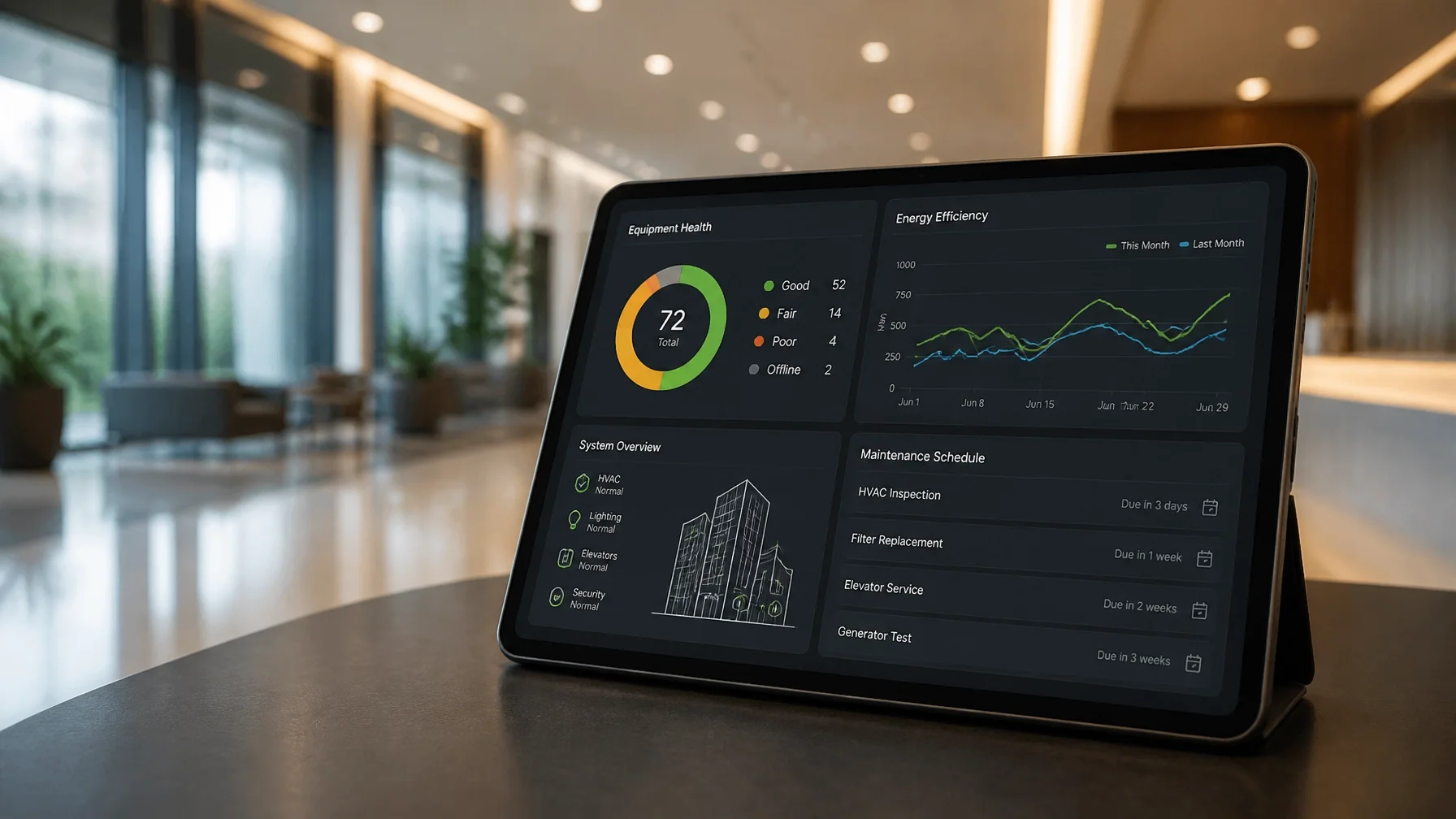
At Jovel Inc., we believe that transparency is the key to a successful partnership. We use modern digital tools to provide you with a complete view of your equipment health. Instead of just a paper invoice, you receive a digital service history that includes photos of the work performed and checklists of every point inspected.
This data driven approach allows you to see the visual proof of your ROI. When you can track the performance of an RTU over three years, you can make informed decisions about when to repair and when to replace. This level of detail is what separates a true New England facility maintenance company from a basic contractor.
Seasonal Planning in the Northeast: A 12 Month Roadmap
Maintenance is not a one time event: it is a seasonal cycle. In the spring, we focus on transitioning your systems for the humidity of a Massachusetts summer. This includes checking refrigerant levels and cleaning outdoor condenser coils that may be clogged with winter debris.
In the fall, the priority shifts to winterization. We inspect boilers, check heat exchangers for cracks, and ensure that exterior pipes are protected from freezing. This seasonal roadmap ensures that your MEP system reliability remains high, regardless of what the New England weather throws your way.
Choosing the Right Maintenance Partner in Massachusetts
Not all service providers are created equal. When selecting a facility maintenance contractor New England, look for a partner who offers single source capability. Having one company handle your mechanical, electrical, and plumbing needs reduces the administrative burden on your team and ensures that your systems are working in harmony.
Jovel Inc. prides itself on being more than just a contractor: we are a proactive partner. We understand the specific codes and operational demands of local businesses. Our membership plan is designed to give you priority service and a structured maintenance schedule that fits your unique needs.
Conclusion: Making the Shift to a Proactive Future
The choice between reactive and proactive maintenance is ultimately a choice between chaos and control. While you can never eliminate the possibility of an equipment failure, you can drastically reduce its frequency and its impact on your budget. By investing in scheduled MEP care, you protect your tenants, your equipment, and your profitability.
Stop paying the emergency premium and start investing in the long term health of your property. A well maintained building is a more valuable asset and a more efficient place to do business.
Ready to protect your bottom line? Don't wait for the next emergency call to eat your budget. Contact Jovel Inc. today to request a maintenance assessment and let us build a custom plan for your Massachusetts facility.
